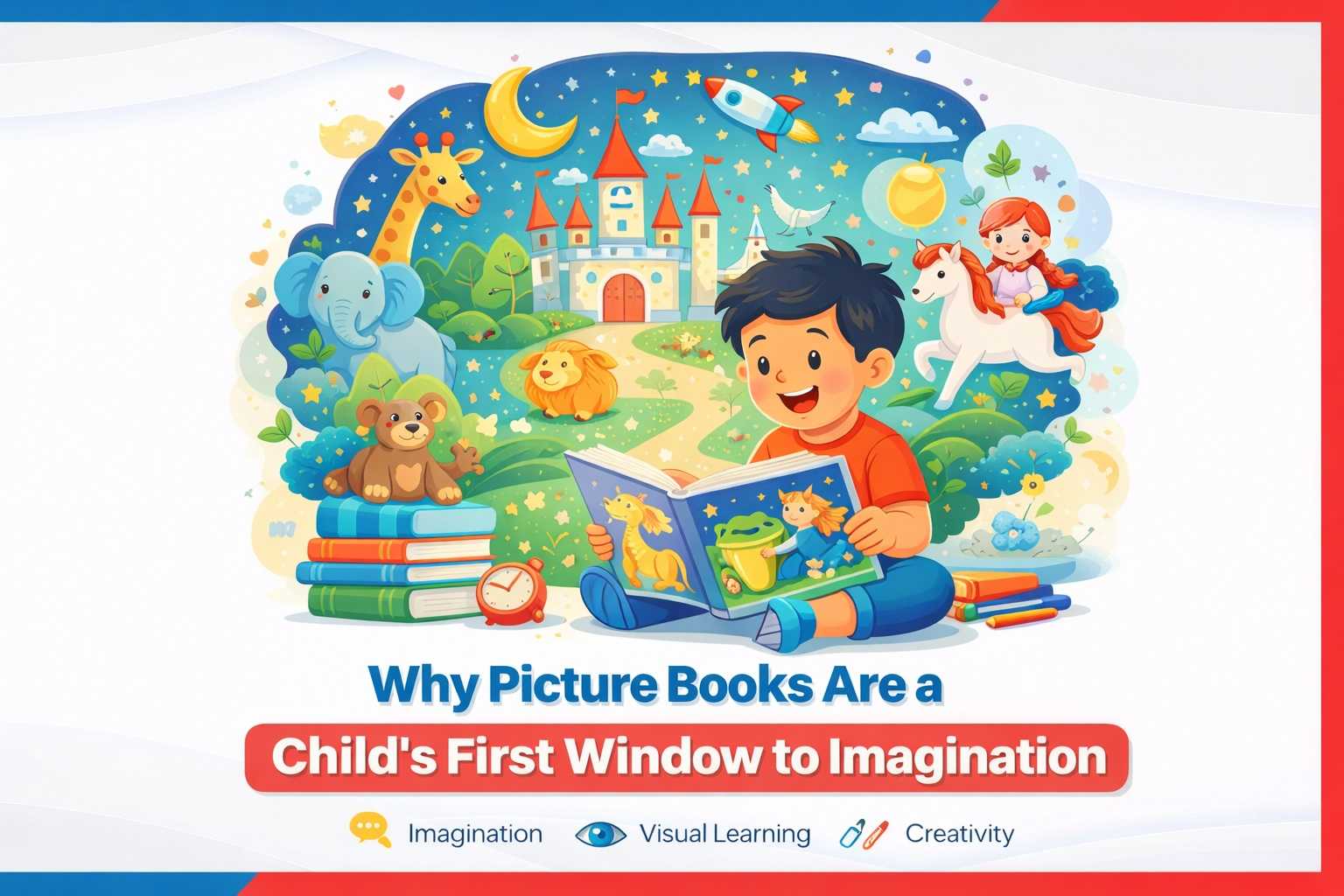
Children start to learn about the world long before we know it. Even before they are able to read words or say full sentences, they observe, notice colors, shapes, faces, and expressions. At this early stage picture books have a very powerful role to play. They are often the first link that a child has to stories, ideas and imagination.
Picture books are not just pages with pictures. They help children to understand emotions, recognize objects, build language skills and explore creativity. For young minds, these books form a safe and exciting space where learning is natural and joyful.
In this blog we will discuss why picture books are so important in the early childhood setting, how they contribute to the development of the imagination, and why they are considered the foundation of early learning.
What Are Picture Books?
Picture books are books in which pictures make the major message. Words are few or sometimes not present at all. The illustrations carry the story and help children to understand the meaning without having strong reading skills.
A picture book for kids will typically focus on familiar things such as animals, nature, family, daily activities or simple emotions. These books are specially designed to be appropriate to the child’s thinking ability and curiosity.
For little children, pictures are easier to grasp than text. This is why picture books are their first step in the world of stories and learning.
Why Pictures are More Important than Words in Early Childhood?
During early childhood, the brain develops at a very rapid rate. Children learn better with visuals as images are processed faster than words. Pictures help children to remember things for a longer time and understand things better.
When a child looks at a picture, his or her brain begins to ask questions:
- What is this?
- What is happening here?
- Why does this look different?
This natural questioning is the beginning of imagination and thinking.
How Pictures Support Brain Development
| Aspect of Development | Role of Picture Books |
| Visual skills | Improve focus, color recognition, and observation |
| Language growth | Introduce new words through images |
| Thinking ability | Encourage children to connect ideas |
| Memory | Help children recall images and stories |
| Creativity | Allow children to imagine beyond the page |
Pictures form meaning even before the child knows the letters. This is why picture books are often found in beginning learning books that are used at home and in preschool settings.
Picture Books as a Gateway to Imagination
Imagination is the ability of thinking on a broader level than what is seen. Picture books encourage children to imagine their own story. A single picture can lead to a lot of different thoughts depending on the child.
For example, when children see animal pictures for kids they may imagine:
- Where the animal lives
- What sounds it makes
- What it eats
- Whether it is friendly or scary
This process helps kids to make up stories in their heads. They start to relate pictures with emotions, actions and ideas.
Unlike screens, picture books give kids time to stop, think and explore at their own pace. This slow and thoughtful interaction is very important for the development of creativity.
Role of Picture Books in Language Development
Even if a picture book contains very few words, it will help with language learning. Parents and teachers tend to talk about the pictures, name objects and describe actions. This conversation develops vocabulary in a natural way.
Children learn new words when they hear them repeatedly and are looking at pictures. Over time, they start using these words in their daily life.
For example, books with birds pictures for kids help children learn:
- Names of birds
- Colors and sizes
Flying, nesting and singing actions
This makes the learning of languages easy and fun without pressure.
Learning About the World Through Pictures
Picture books introduce children to the world around them in a safe and simple manner. They help children to recognize the animals, nature, people, and everyday objects.
Learning Areas Covered by Picture Books
| Learning Area | How Picture Books Help |
| Nature | Introduce animals, birds, plants |
| Environment | Show seasons, weather, surroundings |
| Social life | Teach family roles and community |
| Daily routine | Explain activities like eating, playing |
| Values | Show sharing, caring, and honesty |
This is why picture books are considered the base of early learning books that support overall development.
Why Picture Books Build Focus and Attention
In today’s digital world children are easily distracted. Picture books are useful for improving attention span as they encourage children to sit, look and think.
Unlike videos, picture books do not progress on their own. Children control the pace. They are able to spend time on one picture and ask questions and they can go back to the same page over and over again.
This habit helps to develop patience and focus, important skills for later learning.
Picture Books and Parent-Child Bonding
Reading picture books together is special bonding time. When parents and children sit together and talk about pictures it builds trust and emotional connection.
Children feel secure in questioning and expressing thoughts. These times are also good for parents to know how their child thinks and imagines.
Picture books used regularly help to strengthen communication between parents and children and make learning a shared experience, not a task.
Why Picture Books are Still Relevant Today?
Even with the help of modern learning tools, picture books are hard to replace. They are simple, effective, and so engaging. They stimulate imagination without being overstimulating.
Picture books do not force learning. Instead, they welcome curiosity. This natural learning approach makes them timeless and valuable to every child.
Frequently Asked Questions (FAQs)
1. At what age should kids start using picture books?
Children can begin interacting with picture books as early as infancy. Bright pictures help to stimulate vision and curiosity.
2. How do picture books enhance the imagination?
They give children the opportunity to make up their own stories from the pictures which encourages creative thinking and storytelling.
3. Are picture books useful even without text?
Yes, picture-only books help kids to understand stories using visuals and develop interpretation skills.
4. How often should picture books be read to children by parents?
Daily reading, even for a few minutes, helps to build routine, focus and better learning habits.
5. Do picture books help in school readiness?
Yes, they support language, focus, understanding of emotions, and curiosity, which are important for early education.
Final Thoughts
Picture books are truly the child’s first gateway to imagination. They influence how children see the world, express emotions and build thinking skills. From building vocabulary to encouraging creativity, their effect goes far beyond simple reading.
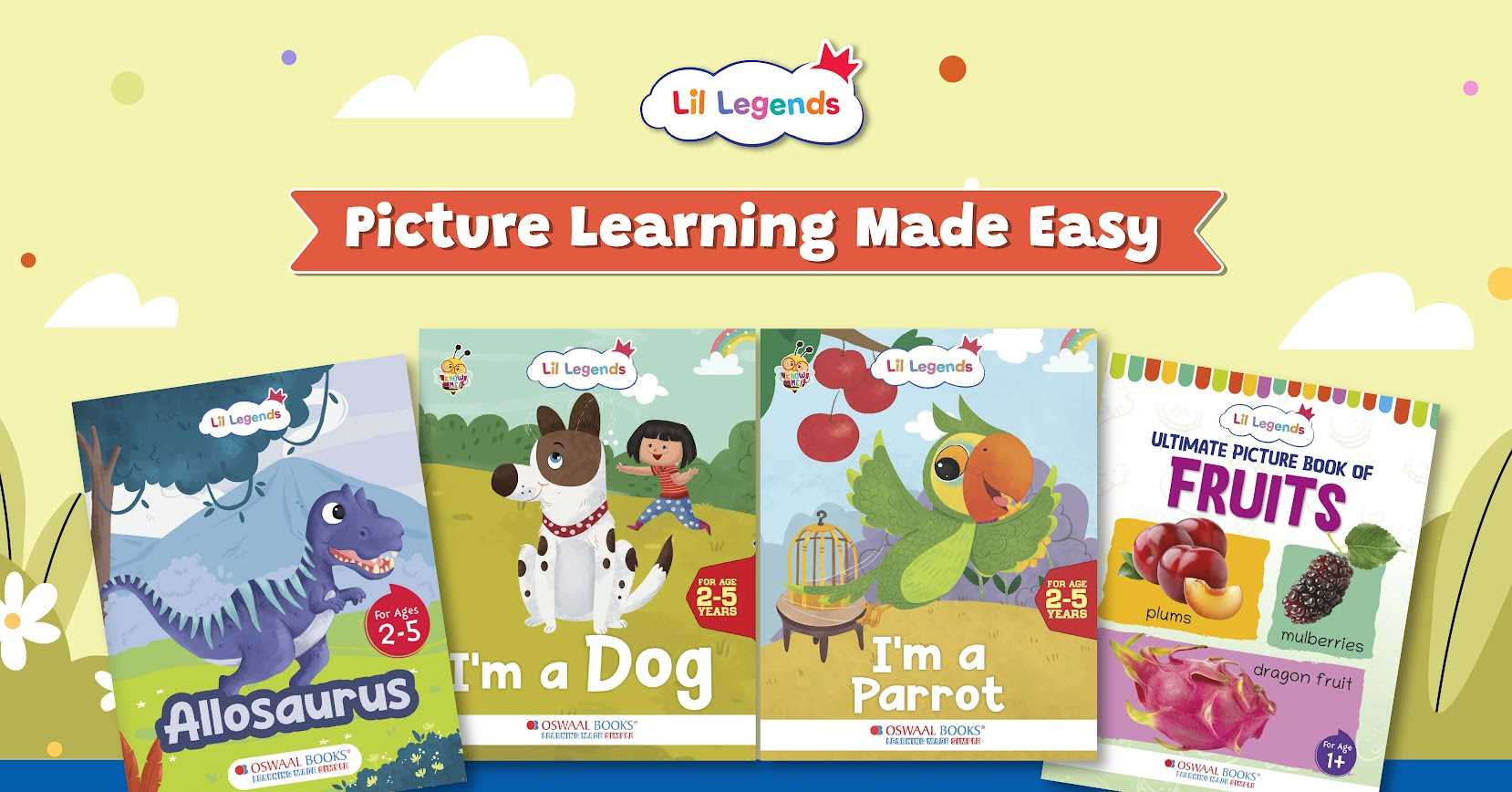
If you are seeking to support your child’s learning journey with well thought-out educational resources, check out the wide range of learning materials offered by Oswaal Books. Their focus on kid-friendly content and structured learning makes them a trusted choice for parents who value strong foundations in early education.
Start to develop imagination at an early age, as every great idea starts with a picture.

Comments are closed.