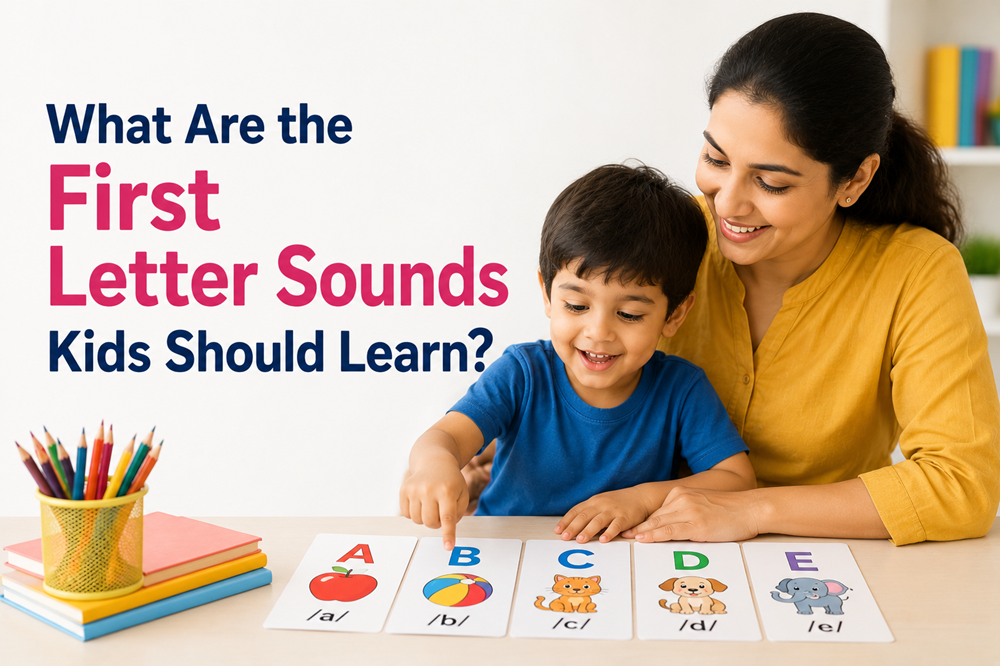
Children should learn continuous consonant sounds first (m, s, f, n, l — sounds that can be stretched out), followed by short vowel sounds (a, e, i, o, u), then simple stop consonants (b, t, p, d). Once the child knows a few sounds from each group, they can start blending them into CVC (Consonant-Vowel-Consonant) words like cat, sun, pen, and dog. To make these early learning years more magical, Phonics Books for kids are perfect for a child aged 4 and above. It gently teaches them these sounds through colourful illustrations, playful exercises, and a step-by-step approach, turning every small “aha” moment into a memory to cherish. If, as a parent, you are wondering where to begin, which sounds come first, or how to make it fun for your toddler instead of overwhelming, you’re in the right place.
Why Letter Sounds Matter More Than the Alphabet Song?
Most of us grew up singing the ABC song. It’s adorable, but one should note that knowing the name of a letter, namely “A, B, C,” does not equal knowing the sound it makes. Apparently, it is a sound, not a name, that allows a child to read
When your child sees the word “cat,” they don’t need to know the letter is called “C.” They need to know it makes a kuh sound. String together kuh-a-t, and suddenly, they’ve read their first word.
It is called phonemic awareness, the ability to hear and identify the sounds that comprise any spoken language. To achieve that with great success, your child has to make use of the phonics books that help develop phonemic awareness by engaging children in playing games with colourful illustrations and easy activities.
4-Step Order for Teaching Letter Sounds to Kids
Most structured phonics tutorials, including those prepared by experienced early-childhood educators, follow this 4-step layered sequence to let the child learn first letter sounds:
Continuous Sounds (Start Here)
Letters like m, s, f, n, l are easier for beginners because they can be stretched out: “mmmm,” “ssss,” “fffff.” These build early confidence quickly since little tongues can hold the sound and hear it clearly.
Short Vowel Sounds
The vowels a, e, i, o, u — especially their short forms (like the “a” in cat or the “i” in pig) — are the glue that holds three-letter words together. Once a child grasps a vowel sound, entire new words become readable.
Simple Stop Consonants
Sounds like b, t, p, and d come next. These are quick “stop-and-go” sounds, slightly trickier to isolate — but by this stage, your child already has the confidence to take them on.
Blending Into CVC Words
This is where the real magic happens. Once a child knows a few consonants and a vowel sound, they can blend them into simple CVC (Consonant-Vowel-Consonant) words — cat, dog, sun, pen, bat. This is the moment most parents describe as watching their child “click” into reading.
Best phonics books sum up this structured 4-step order with engaging exercises, so that your child can learn letter sounds step by step, build confidence, and gradually start blending sounds into simple words.
How Phonics Books Teach Letter Sounds Without Pressure?
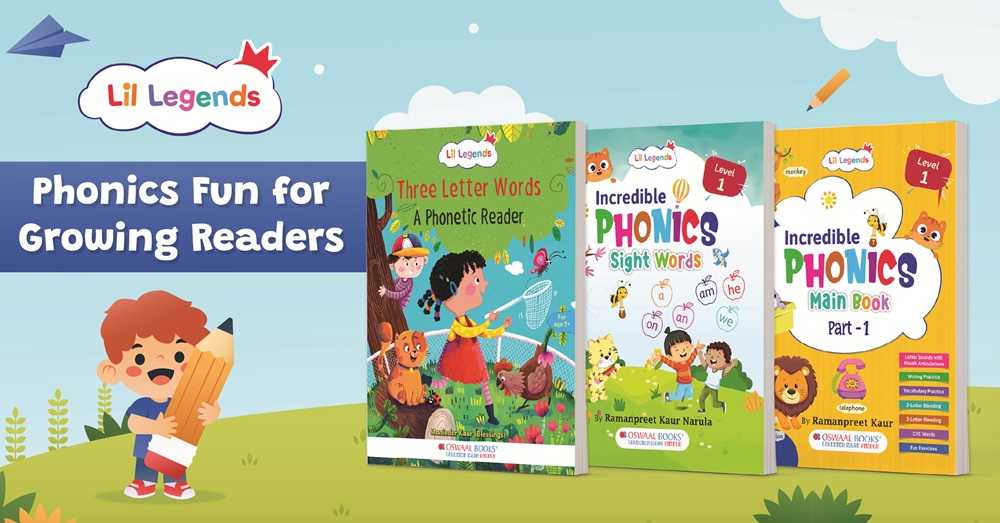
The best approach to teaching young children new concepts is through play, rhythm, and images, instead of using repetitive teaching methods like worksheets and drills. The core idea behind the series of Lil Legends Phonics reading books is that learning sounds should be fun and exciting, rather than being taught in a clinical approach.
The following features make the series effective for young learners:
- Beautifully illustrated pages help children make connections in their minds and form images.
- Gentle progression through 4 levels makes children progress at their own pace from simple sound identification to mastering CVC words.
- Fun and engaging activities are developed by qualified specialists in the sphere of Teaching.
- Writing practice and vocabulary exercises help children improve their pronunciation, spelling, and handwriting naturally in the same task.
Many parents report that their child now asks for phonics time — not because they have to, but because they genuinely enjoy it. That’s the difference between teaching a skill and creating a memory.
Conclusion
Early phonics learning isn’t only academic — it’s deeply emotional. The first time your child sounds out a word on their own, without help, there’s a look on their face: surprise mixed with pride, that unmistakable “wait, I did that?” moment. Every “aha” moment your child has while sounding out their first three-letter word becomes a quiet, internal belief: I can figure things out. I can read. I can learn. That belief shapes how they approach challenges for years to come.
Explore the Lil Legends Phonics Books – Three Letter Words series today, and turn your child’s first steps into reading into moments you’ll both cherish.
Frequently Asked Questions
1- At what age should kids start learning letter sounds?
Most children are developmentally ready to begin around age 4, when they can start distinguishing individual sounds in spoken words.
2- Should I teach letter names or letter sounds first?
Letter sounds should generally come first (or alongside letter names), since sounds are what children actually use to decode and read words.
3 – How long does it take for a child to learn all the letter sounds?
This varies by child, but with consistent, playful practice, most children build solid letter-sound recognition within a few months, progressing naturally into CVC blending.

Comments are closed.