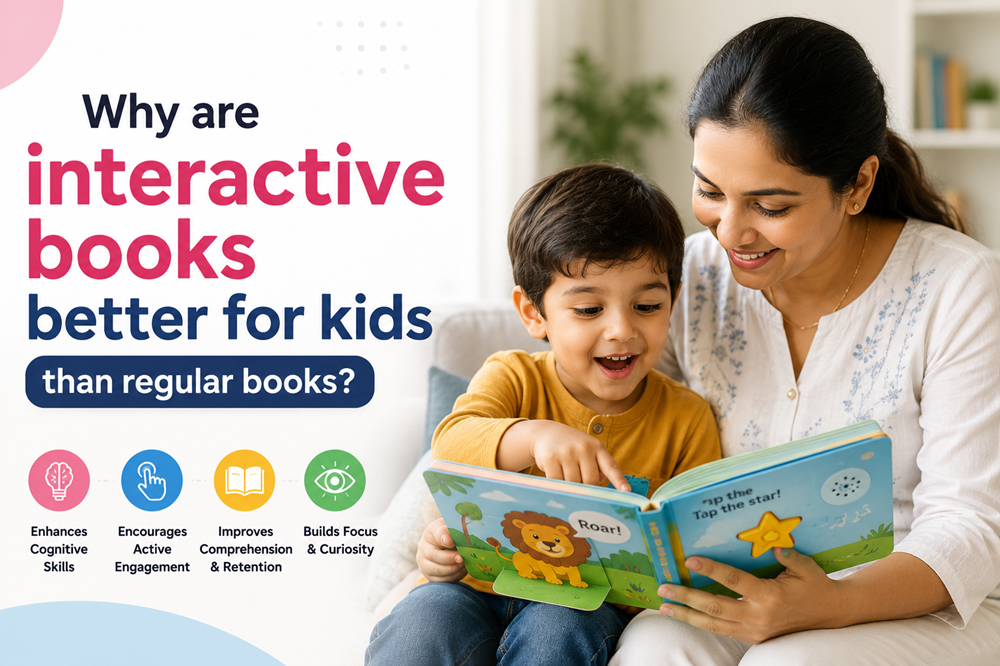
Interactive books are better for kids than regular books because they engage multiple senses at once. Children don’t just read; they touch, draw, colour, and play. This hands-on approach helps children’s retention of information, concentration, and the acquisition of skills such as creativity, motor skills, and early literacy. Studies indicate that children learn best by participating, rather than by listening. Whether it’s kids’ sticker books or colouring books for kids, doing it sticks.
What is an “Interactive” Book?
A regular book requires a child to sit and listen or read. An interactive book encourages the child to participate. This might involve peeling a sticker, filling a colour, answering a question on the page or following a story whilst undertaking an enjoyable activity.
Interactive books come in all shapes and sizes, from a simple picture book for children asking “What do you see?” to full activity books for kids filled with puzzles, mazes and games. The only difference is participation. The child is not only a reader, but a part of the story or learning experience.
Key Benefits of Interactive Books for Kids
Here is a quick look at how interactive books help children grow:
| Benefit | How It Helps |
| Better Focus | Activities keep kids engaged longer than text alone |
| Improved Memory | Doing something (coloring, sticking) helps kids remember it |
| Fine Motor Skills | Holding crayons, peeling stickers, and drawing build hand strength |
| Creativity | Open-ended tasks let children express themselves freely |
| Language Skills | Story books for kids with questions encourage talking and thinking |
| Confidence | Completing an activity gives kids a sense of achievement |
| Early Literacy | Early learning books with letters and phonics build reading foundations |
Research by the American Academy of Paediatrics (AAP) indicates that children younger than 8 years who participate in shared reading with interactive components have significantly higher vocabulary and comprehension scores.
Interactive Books vs Regular Books: A Quick Comparison
| Feature | Regular Books | Interactive Books |
| Child’s Role | Passive listener/reader | Active participant |
| Skill Development | Listening, imagination | Motor skills, creativity, cognition |
| Engagement Level | Moderate | High |
| Learning Retention | Good | Excellent |
| Best For | Bedtime stories, older readers | Toddlers, preschoolers, early learners |
| Examples | Novels, fairy tales | Colouring books, activity books, sticker books |
Types of Interactive Books for Kids
There is no one-size-fits-all when it comes to children’s books. There are various kinds of interactive books for various purposes. Let’s take a look at the breakdown:
1. Activity Books for Kids
These books contain puzzles, dot-to-dot drawings, mazes, and games. They stimulate the brain and keep little hands occupied. Activity books are ideal for travelling, waiting rooms, or quiet times at home.
2. Sticker Books for Kids
There’s a reason why sticker books are a child’s favourite! Stickers in the correct locations help to develop concentration, hand-eye co-ordination and even vocabulary (if stickers are labelled). They are rewarding and fun — each page completed is a success.
3. Picture Book for Kids
A good picture book is more than pretty pictures. It helps kids “read” the pictures, interpret feelings and associate words with pictures. Pointing to the pictures and asking questions such as “What is the puppy doing?” encourages conversation and thinking.
4. Coloring Books for Kids
One of the easiest and most effective activities for young children is colouring. Kids coloring books aid in the development of pencil grip, colour recognition, concentration and creativity. A study published in the Journal of the American Art Therapy Association found that colouring helps children to lower stress and improve their mood.
5. Early Learning Books
These are intended to have a specific educational purpose: alphabet, numbers, shapes or phonics. Early learning books will frequently feature simple text with bright pictures and activities such as matching or tracing. They are components of school readiness.
6. Story Books for Kids
Story books include narrative and interactive questions such as: What do you think will happen next? Can you spot the cat on this page? These books develop imagination, empathy and listening skills. Brands such as Lil Legends provide beautifully illustrated story books for kids which combine captivating stories with fun, age appropriate questions that engage children in the story.
Best Book Type by Age Group
| Age Group | Best Book Type | Why |
| 0–2 years | Picture book for kids | Builds visual recognition and language |
| 2–4 years | Sticker books for kids | Develops fine motor skills and vocabulary |
| 3–5 years | Coloring books for kids | Improves grip, color knowledge, and focus |
| 4–6 years | Early learning books | Introduces letters, numbers, and phonics |
| 5–7 years | Activity books for kids | Boosts problem-solving and critical thinking |
| 4–8 years | Story books for kids | Develops imagination, empathy, and literacy |
Overall Summary
Interactive books are more effective than regular books for young children because they make reading active learning. From picture books for kids to encourage discussion, to coloring books for kids to develop fine motor skills, to activity books for kids to stimulate thinking, to sticker books for kids to celebrate achievement, to early learning books that prepare children for school, to story books for kids that inspire imagination each type has something to offer. A combination of all types is the best option, depending on your child’s age and interest. Interactive reading is not only more fun, but it’s also smarter learning.
FAQs
Q1. Are interactive books good for toddlers?
Yes! Interactive books are particularly good for toddlers. Sticker books and picture books are used to develop toddlers’ hand-eye coordination, language and attention from 12-18 months.
Q2. What is the difference between activity books and story books for kids?
Story books for kids are based on stories and imagination, and activity books for kids feature activities such as puzzles, mazes, and games. They are both useful and have different developmental functions.
Q3. At what age should kids start coloring books?
Most children can begin coloring books for kids around the age of 2-3. They start to acquire the hand strength and coordination to hold a crayon and make purposeful marks at this stage.
Q4. How many books should a child read per week?
Experts say that children should be read to daily. Shared reading, whether it’s story books, picture books or activity books, just 15-20 minutes a week can have a huge impact on development

Comments are closed.